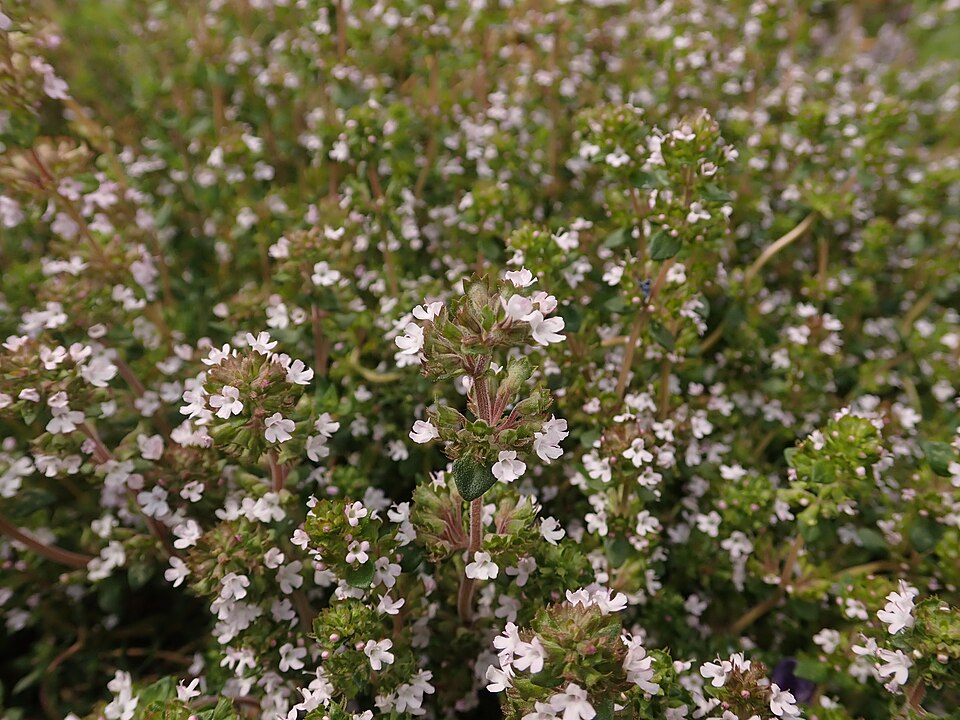
Common or English thyme (Thymus vulgaris) is a low, woody perennial with tiny aromatic leaves. Buy a plant labelled as culinary thyme: some creeping thymes are grown mainly as ornamental groundcovers.
Keep the roots dry and the leaves sunny
- A small transplant is the easiest start. Give it full sun and very well-drained soil or potting mix.
- Water a new plant regularly while roots establish. After that, let the upper soil begin to dry before watering again; soggy soil is a bigger problem than a missed day.
- A pot needs a drainage hole. Thyme is a good container neighbour for oregano, but not for moisture-loving mint or parsley.
- Older plants can become woody. Light, regular tip-cutting during active growth keeps green shoots coming; avoid cutting hard into bare old wood unless local guidance says the variety will recover.
Snip a sprig
Use clean scissors to cut a green sprig just above a cluster of leaves. Take a few stems from different sides rather than scalping one patch, and remove no more than about one-third of a perennial plant at once. Thyme is most aromatic just before flowering, but a few flower clusters are excellent for bees.
Tiny leaves, easy wins
- Strip a few rinsed leaves from the stem and mix them with potatoes before roasting.
- Add a whole sprig to canned soup or tomato sauce while it warms, then remove the woody stem before serving.
- Stir chopped thyme into softened butter and spread it on toast or a grilled-cheese sandwich.
Rinse thyme under cool running water just before preparing it and dry it with a clean towel. Do not use unknown ornamental thyme in food until a knowledgeable adult has checked its exact identity and growing history.