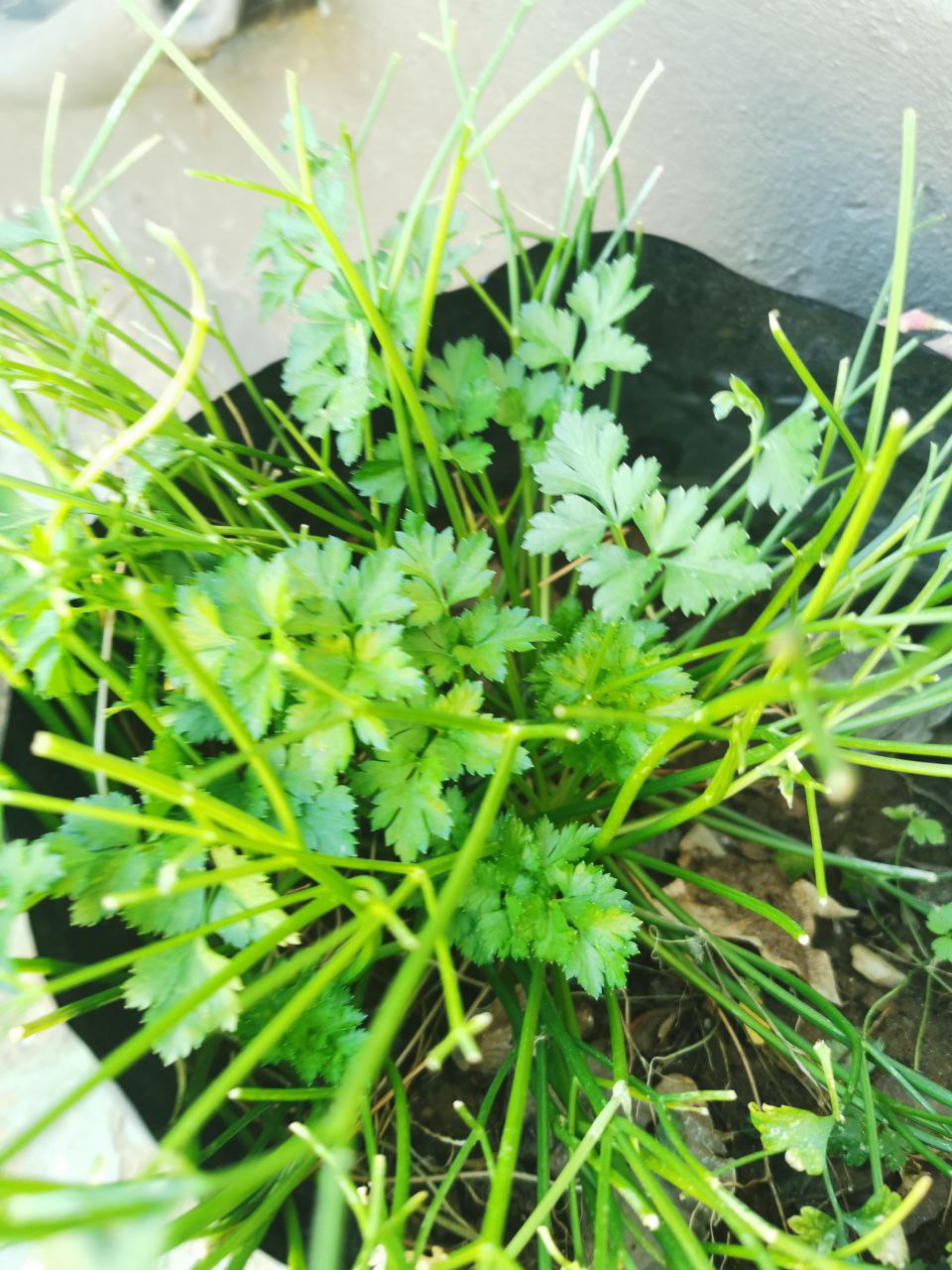
Photo: Aisha Shipanga, CC BY-SA 4.0, via Wikimedia Commons. Unchanged apart from web resizing.

Parsley (Petroselinum crispum) is a biennial usually grown for one season. Flat-leaf or Italian parsley has strong flavour; curly parsley stays compact and is just as edible when correctly identified.
Grow it
- Sow shallowly in full sun to part shade, following the packet for depth and spacing. Parsley can be slow to germinate, so mark the row and be patient.
- Soaking seed in water overnight before sowing can improve germination. Keep the seed bed consistently moist, not soggy, while you wait.
- Parsley fits well in a container with a drainage hole. Do not crowd it tightly with faster herbs that will shade it.
- Black swallowtail caterpillars may eat the leaves. They become beautiful butterflies, so consider sharing the plant instead of reaching for a spray.
Harvest it
Choose the largest outside stalks and cut each one near the base of the plant. Leave the small new stalks in the centre. Snipping only the leafy tops leaves a forest of bare stems and does not encourage the same tidy new growth.
Try it
- Chop a small handful into scrambled eggs, buttered potatoes, rice, soup, or canned beans just before serving.
- Stir chopped parsley and a squeeze of lemon into plain yogurt for a quick dip.
- Give a cook a washed, thoroughly dried bunch wrapped loosely in a clean paper towel inside a zipper bag. Keep it refrigerated and use it soon.
Rinse parsley under cool running water just before preparing it and dry it with a clean towel. Never gather look-alike leaves from the wild; plants in the carrot family include dangerously poisonous species.