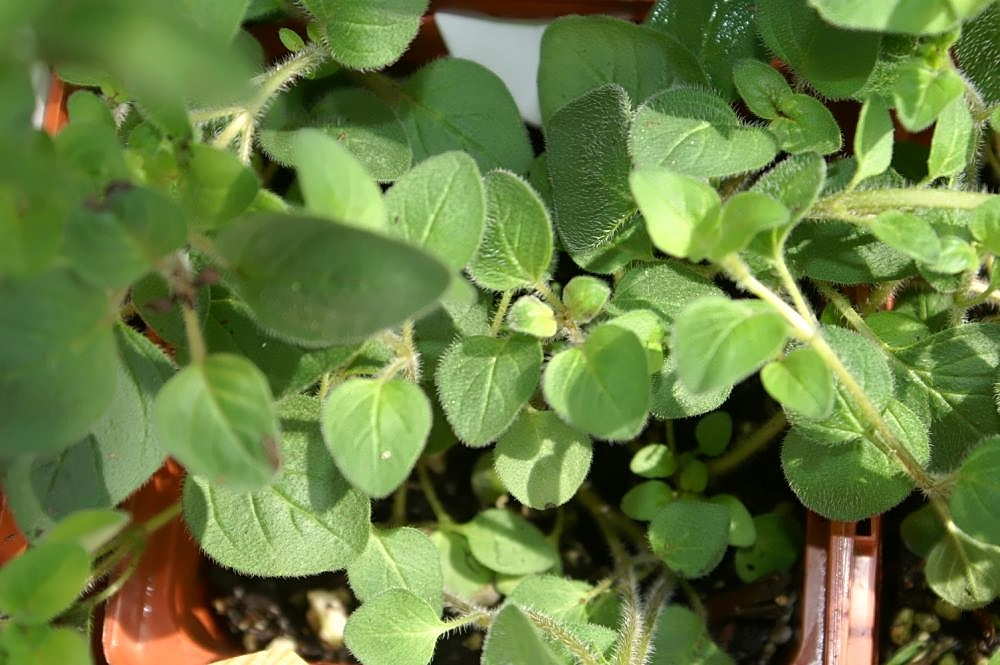
Photo: David J. Stang, CC BY-SA 4.0, via Wikimedia Commons. Unchanged apart from web resizing.

Oregano is a flavour as well as a plant name, so labels matter. Greek oregano (Origanum vulgare subsp. hirtum) is a dependable culinary choice. Sweet marjoram is related but milder.
Grow it lean and sunny
- Buying a labelled plant or a cutting from a good-tasting plant is easier and more predictable than seed. Seed-grown oregano can vary in flavour.
- Choose full sun and excellent drainage. Oregano dislikes wet roots, especially in winter, and usually needs less water after it is established than basil or parsley.
- Use a container with a drainage hole if your garden soil stays heavy and wet. Do not crowd it with herbs that need constantly damp soil.
- Check the plant label for local winter hardiness. A potted plant may need winter protection in cold regions.
Trim for another round
Just before flower buds open, cut leafy stem tips while leaving four to six pairs of leaves on each stem. Those leaves support new side shoots, keeping the plant bushier. Do not remove more than one-third of a perennial herb at one time. A few flowers can be left for pollinators.
Sprinkle a little fun
- Rub a clean leaf between your fingers and compare its smell with the dried oregano in the cupboard.
- Chop fresh leaves into canned tomato sauce, bean soup, salad dressing, or butter for toast.
- Sprinkle a few chopped leaves on frozen pizza before baking. Start small: fresh oregano can be bold.
Rinse oregano under cool running water just before using it and dry it with a clean towel. If a plant was sprayed, confirm the product label allows harvest and follow its waiting time.