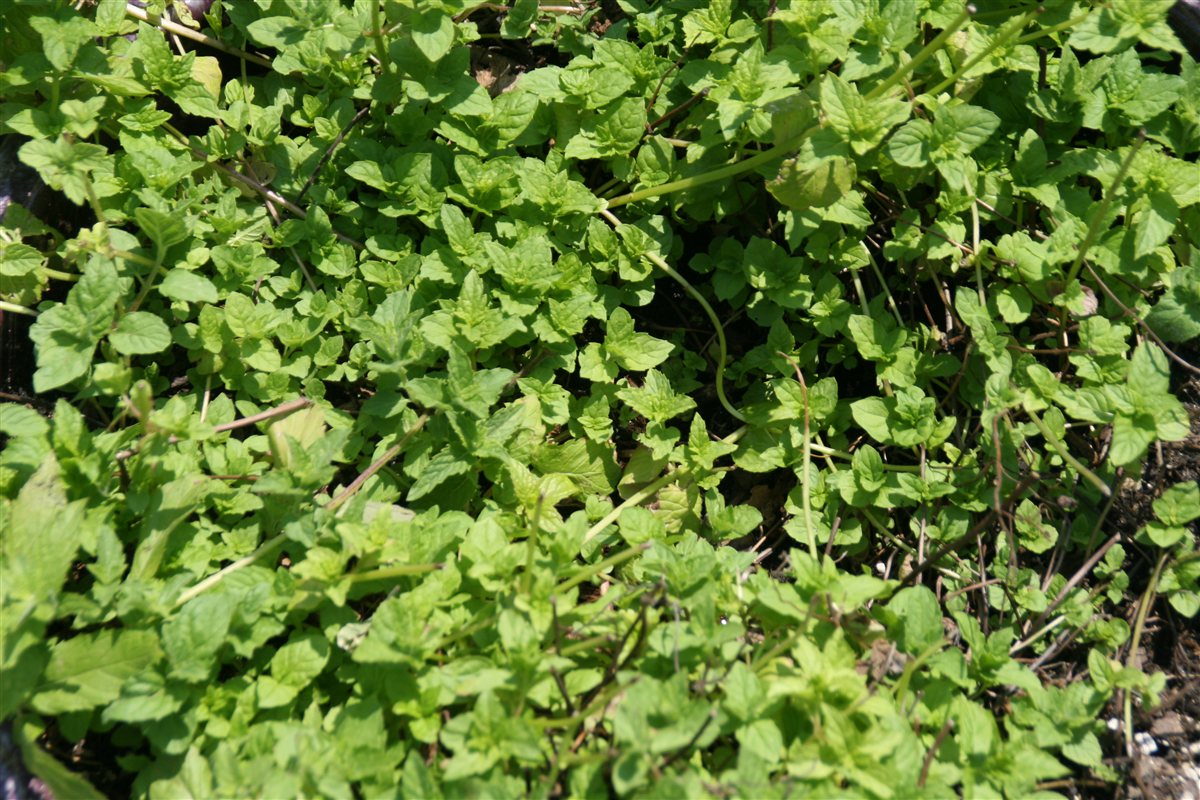
Spearmint (Mentha spicata) and peppermint (Mentha × piperita) are familiar culinary mints. Both are hardy perennials, and both can travel much farther than you planned.
The herb that needs its own room
- Start with a labelled culinary-mint plant. Different mints have different flavours, and a peppermint plant cannot be reliably grown from seed.
- Use a roomy pot with drainage holes and set it on a hard surface where stems cannot creep into garden soil. A buried pot is not a perfect barrier; runners can escape over the rim or through the bottom.
- Give mint sun or light shade and do not let a container dry out completely in hot weather.
- Divide an overfull pot every few years. Snip any stem that reaches the ground outside the pot before it can root.
Cut, don't strip
Cut a whole stem just above a pair of leaves. New side shoots can grow from that point, and frequent cutting keeps the plant producing tender tips. For a larger harvest, take no more than about one-third of a perennial plant at once. Remove flower spikes as they form if leaves are your priority, or leave a few for pollinators.
Cool ideas
- Clap one clean leaf gently between your hands to release the aroma, then float it in cold water with cucumber slices.
- Tear a few leaves over strawberries, melon, peas, or plain yogurt.
- Add a small mint sprig to a lunchbox with a note: “Smell this before you taste it.”
Rinse mint under cool running water just before using it and dry it with a clean towel. Do not taste an unidentified “minty” wild plant, and do not use culinary herbs as home remedies.