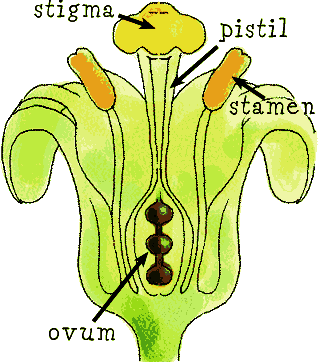
Pollination is the transfer of pollen from an anther to a receptive stigma. Wind, gravity, water, insects, birds, bats, and people can move it, depending on the plant.
Pollination and fertilization are different steps:
- An anther releases pollen grains, each carrying male genetic material.
- Compatible pollen lands on a stigma and may grow a tube down through the style.
- A sperm cell travels through the tube to an egg inside an ovule.
- If fertilization succeeds, the ovule develops into a seed; the ovary often develops into a fruit.
Flowers do not all follow one design. Some contain both stamens and pistils, some plants make separate male and female flowers, and some species need pollen from another compatible plant. Beans and tomatoes often self-pollinate; cucumbers and squash depend much more on insect movement.
Cross-pollination does not automatically create a visible “hybrid” in this year's flower or fruit. Genetic combinations appear in the seeds and the next generation grown from them. For predictable seed, learn whether a cultivar is open-pollinated or hybrid and how its species normally crosses.