A floating row cover is a lightweight, translucent fabric that rests loosely over a row of plants. It lets light and rain through while protecting plants from some insects, wind, and cool weather.
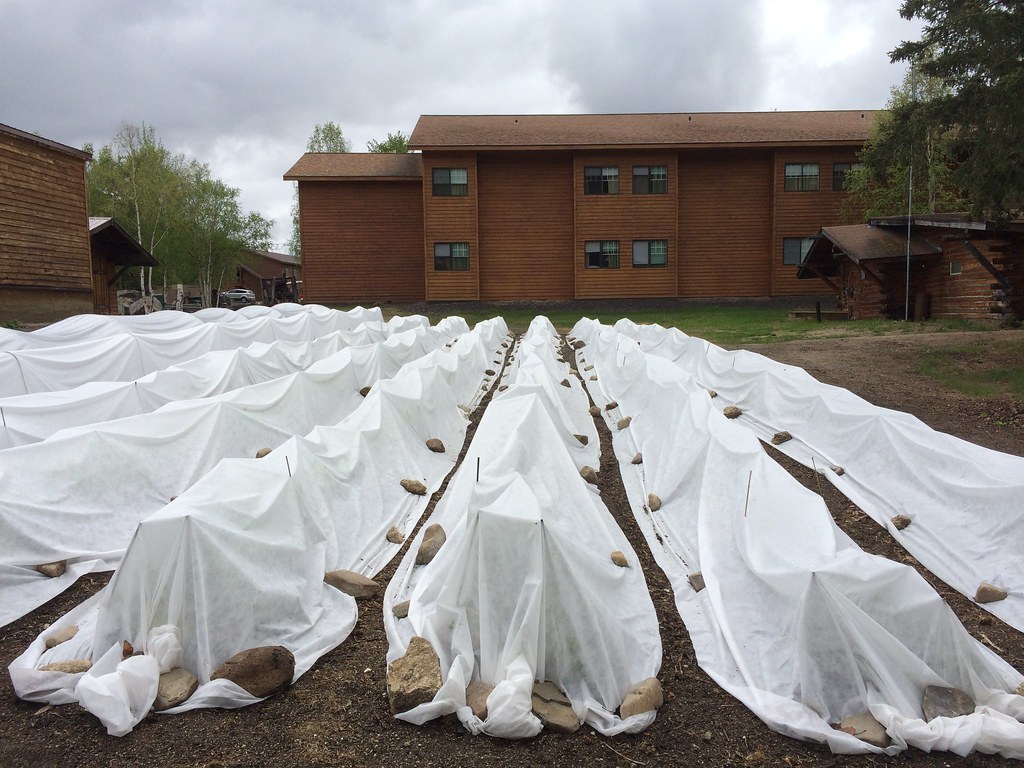
It is not the same material as black landscape fabric. Landscape fabric goes on the soil to block light and weeds. A floating row cover goes above living plants and must transmit light.

- Choose the cover’s weight for the job. Lightweight insect covers transmit the most light. Heavier frost covers hold more warmth but block more sunlight and can overheat plants.
- Check plants for insects and eggs before covering them. A cover can trap a pest underneath along with its lunch.
- Lay the fabric over the row just after planting, leaving enough slack for plants to grow.
- Anchor every edge with soil, garden pins, boards, or smooth stones. Wind-whipped fabric can injure seedlings, and open gaps let insects inside.
- Check the plants regularly for moisture, growth, heat, and trapped pests.
- Remove or vent a heavy cover on warm, bright days.
- Cucumbers, squash, melons, and pumpkins usually need insect pollinators. Remove their cover when flowers begin to open unless the seed packet says the variety makes fruit without pollination.
- After use, shake off soil, let the fabric dry, fold or roll it, and store it away from sunlight. With care, it may last for more than one season.
A row cover works only while pests are outside it. Insects that emerge from the soil beneath the cover or were already on a plant need a different plan.