Plain corrugated cardboard can form a temporary light-blocking layer beneath organic mulch. It is most useful when making a future bed or smothering small weeds—not as a permanent barrier around established plants.
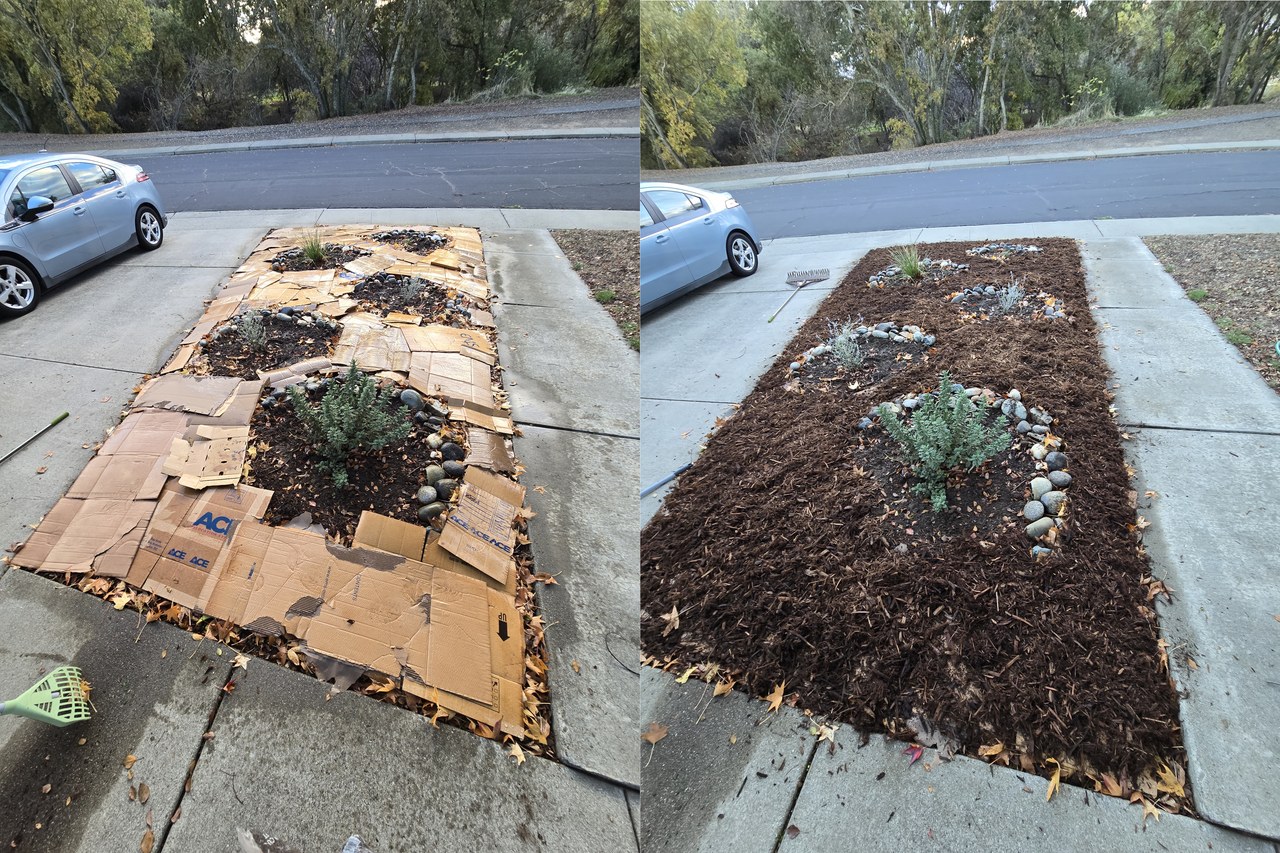
- Remove tape, labels, staples, plastic coatings, and glossy or waxed sections. Use clean brown cardboard with ordinary printing.
- An adult should flatten boxes and handle staples or cutting tools.
- Mow or cut weeds low, water dry soil, and overlap cardboard seams so light does not reach gaps.
- Wet the sheets so they lie flat, then cover them immediately with several inches of composted leaves, wood chips, or another suitable mulch.
- Keep cardboard and mulch several inches away from trunks, crowns, and building siding.
- Watch for runoff, soggy spots, burrowing animals, slugs, and perennial weeds emerging at the edges.
Do not till partly decomposed sheets into wet soil. Let soil organisms break them down from the surface, adding more organic mulch only as needed.